
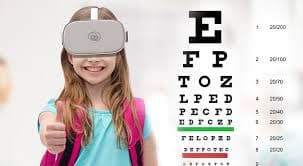

Your doctor’s newest prescription might surprise you: playing video games.
It sounds counterintuitive. After all, screens cause digital eye strain. How could more screen time through a VR headset possibly help?
Yet across clinics worldwide, eye care professionals are prescribing virtual reality gaming as legitimate medical treatment. And the results are remarkable.
Digital eye strain affects over 75% of screen users, causing fatigue, headaches, and vision problems. Traditional treatments help, but many patients find eye drops tedious and exercises boring. Compliance rates suffer, and symptoms persist.
VR therapy changes everything. By transforming treatment into engaging games, doctors achieve what conventional approaches couldn’t patients actually complete their programs.
This guide explains exactly how VR games treat digital eye strain. You’ll discover the science behind this innovative therapy, understand the treatment process, learn about success rates, and determine whether VR therapy might work for you.
For complete information on digital eye strain causes, symptoms, and all treatment options, explore our Digital Eye Strain in 2026: Causes, Symptoms & Treatment.
What Is VR Therapy for Digital Eye Strain?
Defining Virtual Reality Vision Therapy
VR therapy for digital eye strain uses specially designed virtual reality environments to train and strengthen the visual system. Unlike recreational gaming, therapeutic VR programs incorporate specific exercises targeting eye muscles, coordination, and focus flexibility.
This isn’t simply playing games while wearing a headset. Medical professionals develop these programs based on established vision therapy principles, enhanced by immersive technology.
In 2026, VR vision therapy has gained recognition from major ophthalmology organizations. The FDA has cleared several VR therapy platforms for vision treatment, legitimizing what once seemed experimental.
The Evolution from Traditional Vision Therapy
Traditional vision therapy has existed for decades. Patients would visit clinics for exercises using prisms, lenses, and physical targets. These methods worked, but faced significant challenges.
The biggest problem? Boredom.
Patients, especially adults managing busy lives, often abandoned treatment programs. Repetitive exercises felt like chores. Without engagement, compliance dropped, and results suffered.
VR solved this fundamental problem. By wrapping therapeutic exercises in compelling game mechanics, treatment became something patients actually enjoyed. Compliance rates soared, and outcomes improved dramatically.
Why Gaming Elements Make Treatment Effective
The psychology behind gamification in healthcare is powerful.
Games provide immediate feedback, clear progress indicators, and rewarding experiences. These elements trigger dopamine release, creating positive associations with treatment activities.
Immersion matters equally. When patients feel present in virtual environments, they focus completely on therapeutic tasks without conscious effort. The treatment happens naturally through play.
Studies show VR therapy patients complete 89% of prescribed sessions compared to just 54% for traditional exercises.
The Science Behind VR Eye Strain Treatment
How VR Environments Train Your Visual System
Virtual reality offers unique properties for eye training that flat screens cannot replicate.
Three-dimensional environments challenge eye coordination in ways two-dimensional displays cannot. Your eyes must work together to perceive depth, distance, and spatial relationships. This natural engagement trains binocular vision continuously throughout gameplay.
VR also provides variable focal distances within virtual spaces. Objects appear at different depths, requiring your focusing system to constantly adapt. This variety contrasts sharply with fixed-distance screen viewing that causes strain.
Strengthening Ciliary Muscles Through VR
Your ciliary muscles control lens shape for focusing at different distances. Hours of fixed-distance screen viewing exhaust these muscles, contributing significantly to digital eye strain.
VR therapy provides progressive resistance training for your eyes.
Games require focusing on objects at varying virtual distances near targets, mid-range obstacles, distant horizons. This constant variation exercises ciliary muscles through their full range of motion.
Research from the American Academy of Optometry demonstrates measurable ciliary muscle strengthening after just four weeks of consistent VR therapy.
Improving Eye Coordination and Tracking
Many digital eye strain symptoms relate to poor eye teaming and tracking abilities.
VR games naturally incorporate movements that train these functions:
- Smooth pursuit training through following moving targets
- Saccadic movement practice via rapid gaze shifting between objects
- Convergence exercises when focusing on approaching objects
- Divergence training when tracking receding targets
Players don’t realize they’re performing clinical exercises. They’re simply playing games that happen to require these specific eye movements.
Resetting the Visual System
Prolonged screen use creates negative adaptation patterns. Your visual system learns to function suboptimally, maintaining tension and reducing blink rates.
VR therapy helps reset these patterns.
Immersive environments engage natural visual behaviors. Blink rates normalize during absorbing gameplay. Accommodation spasms release as focus distances vary. The visual system relearns healthy function through positive experiences.
How VR Games Actually Heal Tired Eyes
Types of VR Games Used in Treatment
Therapeutic VR programs fall into several categories, each targeting specific aspects of eye strain:
Tracking Games :: Smooth pursuit training :: Following flying objects, catching targets
Puzzle Games :: Focus flexibility :: Solving depth-based puzzles, object manipulation
Action Games :: Rapid eye movement :: Fast-paced target acquisition, obstacle navigation
Relaxation Experiences :: Muscle recovery :: Scenic environments, guided visual meditation
Doctors prescribe specific game types based on individual symptom patterns.
Specific Therapeutic Game Mechanics
Each game mechanic serves therapeutic purposes:
Target tracking requires smooth eye movements following objects through 3D space. This trains pursuit abilities weakened by static screen viewing.
Depth-switching puzzles force rapid focus changes between near and far virtual objects. This exercises accommodation flexibility that screen work diminishes.
Peripheral awareness challenges expand functional visual field. Many strain sufferers develop tunnel vision from concentrated screen focus.
Convergence training games present objects moving toward the player, requiring eyes to work together tracking approaching targets.
Addressing Nighttime Symptom Patterns
Many patients report symptoms worsening in evening hours, even after stopping screen use.
VR therapy specifically addresses this pattern. Evening VR sessions help prepare the visual system for rest. Relaxation-focused programs reduce accumulated tension before sleep.
Many patients struggle with symptoms that worsen after stopping screens. Learn why digital eye strain feels worse at night even after you stop using screens and how VR therapy addresses this pattern.
Long-term VR therapy reduces the delayed symptom phenomenon by building stronger, more resilient visual systems.
The Complete VR Treatment Process
Initial Consultation and Assessment
Treatment begins with comprehensive evaluation.
Your eye care professional performs detailed strain assessment, measuring baseline symptoms, visual function, and identifying specific problem areas. Not everyone qualifies for VR therapy certain conditions require alternative approaches.
Expect discussion about your screen habits, work environment, symptom patterns, and treatment goals. This information shapes your personalized program.
Customized Treatment Plan Development
No two VR therapy programs are identical.
Doctors select specific games, set difficulty progressions, and determine session parameters based on your assessment. Factors influencing program design include:
- Symptom type and severity
- Previous treatment history
- Available time for therapy
- Home vs. clinical treatment preference
- Individual response to VR environments
Typical programs run 8-12 weeks with sessions 3-5 times weekly.
The In-Office VR Treatment Session
Clinical sessions occur under professional supervision.
Typical in-office sessions last 20-30 minutes. Your provider monitors responses, adjusts difficulty in real-time, and ensures proper technique. Professional-grade equipment provides optimal therapeutic experiences.
Supervision proves particularly important during early treatment while adaptation occurs.
At-Home VR Treatment Protocols
Home-based therapy has become increasingly accessible in 2026.
Consumer VR headsets paired with prescription therapy apps enable treatment outside clinical settings. Doctors provide specific usage instructions, game selections, and session schedules.
Remote monitoring technology allows providers to track home session completion and progress metrics. Many patients combine occasional clinical visits with regular home practice.
Combining VR with Traditional Exercises
Hybrid approaches often produce best results.
VR therapy excels at engagement and progressive training. Traditional exercises provide targeted intervention for specific issues. Combining both creates comprehensive treatment programs.
Traditional exercises remain valuable alongside VR therapy. Explore the best eye exercises to reduce digital eye strain fast in 2026 for complementary techniques.
Your doctor may prescribe simple exercises for days between VR sessions, maintaining progress while preventing overuse.
Success Rates and Patient Outcomes
Clinical Research Results
Scientific evidence supporting VR therapy continues growing.
Key research findings include:
- 60% average symptom reduction after 6-week treatment programs
- 85% of patients report meaningful improvement
- Superior outcomes compared to traditional vision therapy in multiple studies
- Sustained benefits documented at 6-month and 12-month follow-ups
A 2025 multicenter trial published in the Journal of Vision Rehabilitation demonstrated VR therapy outperformed conventional treatment across all measured outcomes.
Who Benefits Most from VR Therapy
Certain patients respond particularly well to VR treatment:
- Adults with mild to moderate digital eye strain
- Patients who failed traditional exercise compliance
- Those with accommodation and convergence difficulties
- People comfortable with technology and VR environments
Age affects candidacy. While VR therapy works across age groups, children require specialized pediatric programs with adjusted parameters.
Understanding Treatment Limitations
VR therapy isn’t universal cure.
It cannot address structural eye problems, significant refractive errors, or conditions requiring surgical intervention. Severe dry eye disease may need complementary treatments alongside VR therapy.
Some patients experience initial discomfort adapting to VR environments. Motion sensitivity affects a small percentage of individuals, potentially limiting treatment options.
Realistic expectations matter. VR therapy significantly improves symptoms for most patients but may not eliminate strain completely, especially for those with unavoidably high screen exposure.
Accessing VR Eye Strain Treatment in 2026
Finding Qualified VR Therapy Providers
Not all eye care professionals offer VR treatment.
When searching for providers, ask:
- What VR therapy platforms do you use?
- What training have you completed in VR vision therapy?
- How many patients have you treated with VR?
- Do you offer home-based options?
Optometrists specializing in vision therapy most commonly provide VR treatment. Some ophthalmology practices have added VR programs as well.
Clinical vs. At-Home Treatment Options
Both approaches offer distinct advantages:
Clinical Treatment:
- Professional supervision and monitoring
- High-end equipment
- Real-time adjustment capability
- Better for complex cases
At-Home Treatment:
- Greater convenience and flexibility
- Lower per-session costs
- Easier schedule integration
- Requires initial equipment investment
Many patients begin with clinical sessions, then transition to home-based maintenance therapy.
The Growing VR Therapy Landscape
VR eye treatment is expanding rapidly.
New therapeutic platforms enter the market regularly. Integration with AI enables increasingly personalized treatment. Smart devices connect VR therapy with broader eye health ecosystems.
VR is just one part of eye care’s technological revolution. Discover how AI, VR, and smart devices are changing digital eye strain treatment across the industry.
Is VR Therapy Right for You?
Self-Assessment Questions
Consider these questions when evaluating VR therapy:
- Do you experience persistent eye strain despite traditional self-care?
- Have you struggled to maintain consistent eye exercise routines?
- Are you comfortable using technology and VR devices?
- Do you have access to clinical providers or home equipment?
- Are your symptoms primarily related to digital device use?
If you answered yes to most questions, VR therapy may be worth exploring.
Contraindications and Precautions
Certain conditions may prevent or limit VR therapy:
- Severe motion sickness or vestibular disorders
- Photosensitive epilepsy
- Recent eye surgery (timing restrictions apply)
- Certain neurological conditions
- Very young children (under 7-8 years typically)
Discuss any concerns with your eye care provider before beginning treatment.
Taking the First Step
Ready to explore VR therapy?
Start by scheduling a comprehensive eye examination with a provider offering VR treatment options. Prepare by documenting your symptoms, screen habits, and treatment history.
Ask about trial sessions before committing to full treatment programs. Most providers offer introductory experiences to assess your response.
Conclusion
VR gaming therapy represents one of 2026’s most exciting developments in eye care.
What seemed impossible treating screen-related strain with more screen time—has proven remarkably effective. The science is solid. The results are documented. Patients are finding relief through treatment they actually enjoy.
Key takeaways:
- VR therapy uses gaming mechanics to deliver proven vision therapy exercises
- Clinical evidence shows up to 60% symptom reduction with consistent treatment
- Both clinical and home-based options are now widely available
- VR works best as part of comprehensive eye care approaches
If traditional treatments haven’t provided adequate relief, VR therapy offers a promising alternative worth discussing with your eye care provider.
Frequently Asked Questions
How does VR help with digital eye strain?
VR therapy uses specially designed virtual environments to train eye muscles, improve focus flexibility, and enhance eye coordination. Games incorporate therapeutic mechanics that strengthen ciliary muscles, improve tracking ability, and reset negative visual patterns developed from prolonged screen use. Clinical studies show symptom reduction up to 60% with consistent treatment over 4-6 weeks.
How long does VR eye strain treatment take to work?
Most patients notice initial improvement within 2-3 weeks of consistent VR therapy sessions. Significant symptom reduction typically occurs after 4-6 weeks of regular treatment. Complete treatment programs usually run 8-12 weeks, though some patients require longer based on symptom severity and individual response to therapy.
Is VR therapy for eye strain covered by insurance?
Insurance coverage for VR eye therapy varies by provider and plan. Many vision insurance plans now include coverage for vision therapy, which may extend to VR-based approaches. Coverage is expanding as clinical evidence grows. Contact your insurance provider and eye care professional about specific coverage options currently available for your situation.
Can I do VR eye therapy at home?
Yes, at-home VR therapy is increasingly available in 2026. Consumer VR headsets paired with therapeutic apps enable home-based treatment for many patients. However, initial professional assessment and periodic monitoring remain recommended for optimal outcomes. Home therapy works best combined with occasional clinical sessions for progress evaluation and program adjustments.
Are there any side effects of VR eye strain treatment?
Some patients experience temporary mild discomfort including brief dizziness or slight eye fatigue during initial sessions as adaptation occurs. These effects typically diminish within the first week of treatment. Serious side effects are rare when treatment is properly supervised. Patients with motion sickness sensitivity should discuss concerns with providers before beginning therapy.