
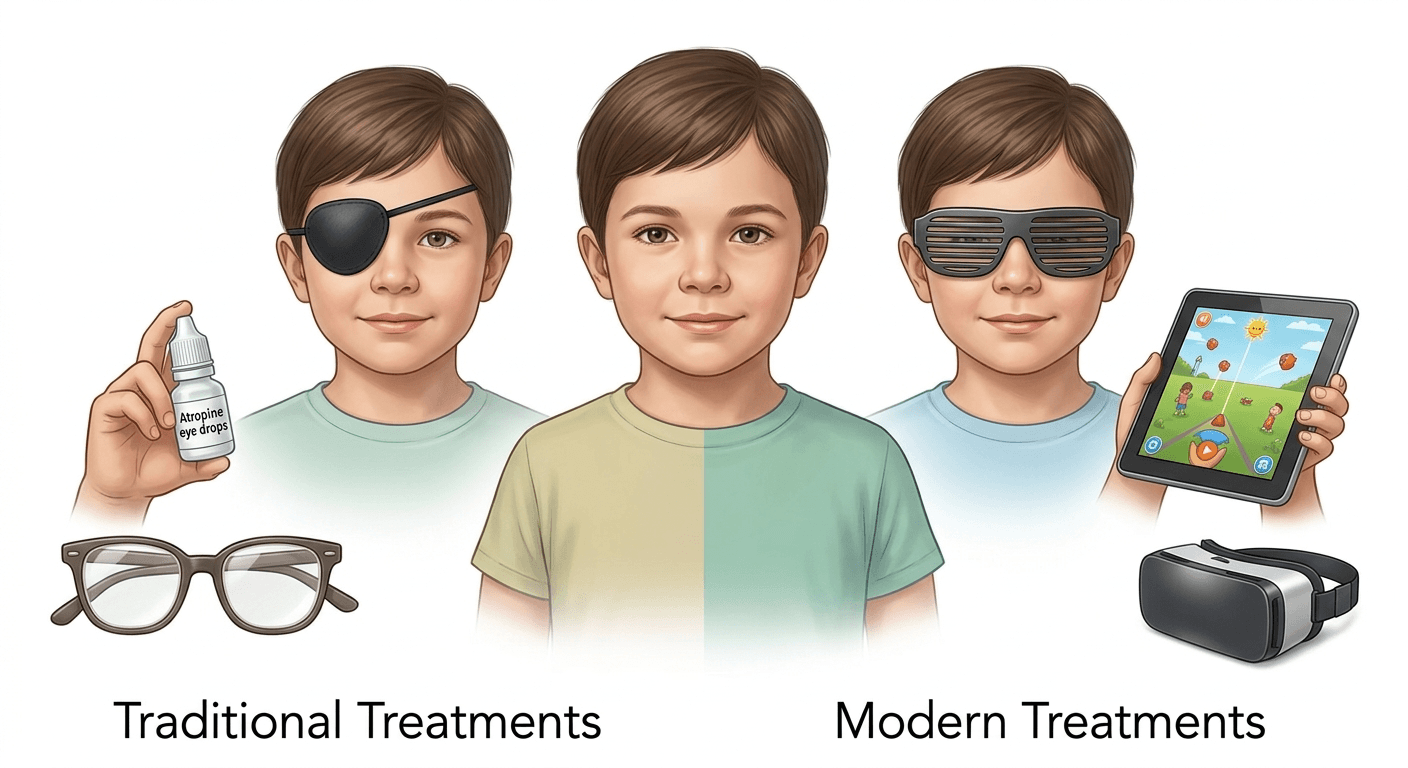
Noticing that your child squints, tilts their head to see better, or keeps closing one eye? These can be early signs of lazy eye a condition that worries many parents but is far more manageable than most people realize.
Lazy eye, clinically known as amblyopia, develops when the brain begins ignoring visual signals from one eye. Over time, that eye becomes weaker not because of any physical damage to the eye itself, but because the brain stops fully processing what it sees.
The good news? Amblyopia is treatable. And with the right treatment started at the right time, most people, including children and adults, can see significant improvement in vision.
If you want to understand the condition more deeply before exploring treatments, our detailed guide on What is Lazy Eye (Amblyopia)? covers everything from causes to symptoms.
This blog focuses specifically on the treatment options available today what they are, how they work, and which one might be right for your situation.
Why Early Treatment Makes a Difference in Lazy Eye Recovery
The brain and eyes develop together during childhood. In the early years of life, the visual system is highly adaptable a quality called neuroplasticity. This is the brain’s ability to rewire itself based on what it experiences.
When lazy eye is present, the brain gradually suppresses signals from the weaker eye. The longer this suppression continues, the more difficult it becomes to reverse. Treating amblyopia early while the brain is still in its most flexible developmental phase gives the visual system the best chance to recover fully.
That said, early treatment does not mean the only window. Research and clinical practice have increasingly shown that older children and adults can also respond to treatment, particularly with newer approaches like vision therapy and digital dichoptic training.
But acting sooner always produces stronger outcomes. If you are weighing the right moment to begin, our guide on When Should You Start Lazy Eye Treatment goes deeper into this decision.
Treatment Options for Lazy Eye — What Are Your Choices?
There is no single universal treatment for lazy eye. The right approach depends on the underlying cause, the patient’s age, and the severity of vision difference between the two eyes. Below are the primary treatment options that eye care professionals use today.

1. Corrective Glasses or Contact Lenses
For many patients, the first step in treating lazy eye is simply prescribing corrective glasses or contact lenses. This is especially true when amblyopia is caused by a refractive error meaning one or both eyes have blurred vision due to nearsightedness, farsightedness, or astigmatism.
When one eye sees more clearly than the other, the brain tends to rely on the sharper eye and ignore the weaker one. Corrective lenses help equalize the visual input between both eyes, giving the brain a reason to engage with the previously ignored eye again.
In mild cases of amblyopia, glasses alone are sometimes enough to restore balance. However, in moderate to severe cases, additional treatment is needed alongside corrective lenses.
Key points:
- Usually the starting point for refractive amblyopia
- Results take several months of consistent wear
- Often combined with patching or vision therapy for better outcomes
2. Eye Patching (Occlusion Therapy)
Eye patching is one of the oldest and most widely recognized treatments for lazy eye and it remains highly effective when used correctly.
The concept is straightforward. A patch is placed over the stronger eye for a set number of hours each day. With the dominant eye covered, the brain is forced to rely on the weaker eye. This repeated use gradually strengthens the neural pathways between the amblyopic eye and the brain.
Patching is typically prescribed for two to six hours per day, depending on how severe the amblyopia is. During patching time, engaging in activities like reading, drawing, or screen-based vision exercises can significantly boost the treatment’s effectiveness.
The biggest challenge with eye patching is compliance particularly in young children who find the patch uncomfortable or frustrating. Consistency is essential for this treatment to work.
Key points:
- Works by forcing the brain to strengthen the weaker eye
- Most effective in children under 7 but beneficial in older children too
- Requires daily commitment and consistent follow-through
- Best results when combined with visual activities during patching sessions
3. Atropine Eye Drops
Atropine eye drops offer an alternative approach for patients or caregivers who find consistent patching difficult to maintain.
Instead of physically covering the stronger eye, atropine drops are applied to that eye to temporarily blur its vision. This creates a similar effect to patching the brain can no longer rely on the stronger eye as its default, so it begins working with the weaker eye more actively.
Atropine is typically used once daily in the stronger eye. Clinical studies have found it to be equally effective as patching for treating moderate amblyopia in children. Many families find it easier to maintain than patching, which can improve overall treatment compliance.
Key points:
- A clinically proven alternative to eye patching
- Applied once daily easier for some families to manage
- Effective for moderate amblyopia, particularly in children
- Regular monitoring by an eye specialist is still required
4. Vision Therapy and Dichoptic Training
Vision therapy is one of the most significant advances in amblyopia treatment in recent years — and it is gaining strong clinical and scientific support.
Unlike patching and atropine, which work by suppressing the stronger eye, vision therapy addresses the neurological root of the problem directly. It involves structured, guided exercises that train the brain and both eyes to work together improving coordination, focus, depth perception, and the brain’s ability to integrate visual input from both eyes simultaneously.
A particularly powerful form of vision therapy for amblyopia is dichoptic training. This approach presents different visual content to each eye at the same time, gradually encouraging the brain to combine input from both eyes rather than suppressing one. It works at the level of binocular vision training both eyes as a team.
Bynocs offers a clinically validated, game-based dichoptic vision therapy program designed specifically for amblyopia. The program uses engaging visual activities delivered through digital devices, making it accessible and suitable for both children and adults including patients who have not responded well to traditional treatments like patching alone.
This approach is particularly significant for older patients. While patching has historically been less effective in adults due to reduced neuroplasticity, vision therapy and dichoptic training continue to show meaningful results across a wider age range.
Key points:
- Targets the neurological cause of amblyopia not just the optical symptoms
- Dichoptic training trains both eyes to work together simultaneously
- Clinically validated programs like Bynocs make this accessible at home
- Increasingly effective for older children and adults
- Often used in combination with glasses or patching for comprehensive results
5. Surgery — When It Becomes Necessary
Surgery is not a standard treatment for all types of lazy eye. It is considered in specific situations where amblyopia is caused by a structural problem that cannot be corrected through glasses, patching, or therapy alone.
The two most common scenarios where surgery is recommended are:
- Strabismus (misaligned or crossed eyes) — When the eyes are significantly turned inward or outward, surgery may be performed to realign the eye muscles. This removes the structural cause of amblyopia. However, surgery corrects the alignment — it does not retrain the brain. Patching or vision therapy is almost always still needed after surgery to restore full visual function.
- Deprivation amblyopia — Conditions like congenital cataracts or a drooping eyelid (ptosis) block light from entering the eye during critical visual development. In these cases, surgery to remove the cataract or correct the eyelid is necessary before any other treatment can be effective.
If you are unsure whether surgery is part of the recommended treatment plan, our guide on Is Surgery Needed for Lazy Eye? When Doctors Recommend It covers this in full detail.
Key points:
- Surgery treats the underlying structural cause — not amblyopia itself
- Required for strabismus-related and deprivation amblyopia in many cases
- Additional vision therapy or patching is typically needed after surgery
- Recommended only when other treatments cannot address the root cause
How Long Does Lazy Eye Treatment Usually Take?
This is one of the most common questions families ask and the honest answer is that treatment timelines vary from person to person.
Several factors influence how long treatment takes:
- Age at the time of diagnosis — younger patients typically respond faster
- Severity of the amblyopia — mild cases resolve more quickly than severe ones
- Type of treatment being used — some approaches show earlier changes than others
- Consistency and compliance — missing sessions or skipping patching significantly extends treatment duration
As a general reference:
- Glasses alone: Several months of consistent wear before re-evaluation
- Patching or atropine: Typically 3 to 6 months of active treatment, with ongoing monitoring
- Vision therapy programs: Structured programs vary in length Bynocs’ protocol is designed with defined session plans and regular progress checkpoints
It is important to set realistic expectations. Improvement with amblyopia treatment is gradual. Regular follow-up appointments with your eye specialist allow for adjustments to the treatment plan based on how the eyes are responding.
For a full breakdown of timelines and what to expect at each stage, visit our guide on How Long Does Lazy Eye Treatment Take.
How Do Doctors Decide Which Lazy Eye Treatment Is Right for You?
Treatment for lazy eye is not one-size-fits-all. Eye care professionals consider several factors before recommending a specific treatment path:
- Age of the patient — the visual system is more adaptable in younger children, influencing which treatments are appropriate and how intensive the plan should be
- Type of amblyopia — refractive, strabismic, and deprivation amblyopia each respond differently to different treatments
- Severity of vision difference — the gap between the two eyes’ visual acuity determines how aggressive the treatment plan needs to be
- Underlying cause — whether the amblyopia stems from refractive error, eye misalignment, or a structural obstruction
- Patient compliance and lifestyle — a treatment plan that fits the patient’s daily routine is more likely to succeed
- Previous treatment history — for older patients, what has or has not worked before guides the next steps
In many cases, the most effective outcomes come from combining treatments. For example, glasses combined with patching, or patching alongside vision therapy, often produces better results than any single treatment used alone.
Your eye care specialist whether a pediatric ophthalmologist, optometrist, or vision therapist will assess all of these factors and create a personalized treatment plan based on your specific situation.
Start Your Lazy Eye Treatment Journey Today
Lazy eye is not a condition you simply have to live with. Whether your child has just been diagnosed or you are an adult who has struggled with amblyopia for years, effective treatment options exist and the landscape of what is possible continues to expand.
From corrective lenses and patching to clinically backed vision therapy and digital dichoptic training, today’s treatment options address amblyopia at multiple levels optically, neurologically, and functionally.
Bynocs provides a scientifically validated, game-based digital vision therapy program for amblyopia designed for both children and adults, and accessible from home. If you are exploring modern treatment approaches, Bynocs is a strong place to start.
The most important step is also the simplest one: consult a qualified eye care professional. A proper evaluation will identify the type and severity of your amblyopia and point you toward the right treatment path.
Frequently Asked Questions About Lazy Eye Treatment
What is the most effective treatment for lazy eye?
There is no single most effective treatment it depends on the cause and severity of amblyopia. In many cases, a combination of corrective glasses, eye patching, and vision therapy produces the best results. For cases caused by structural issues like strabismus, surgery may also be needed.
Can lazy eye be treated without surgery?
Yes. The majority of lazy eye cases are treated successfully without surgery. Surgery is only recommended when amblyopia is caused by a structural problem such as significantly misaligned eyes or a congenital cataract. For most patients, glasses, patching, atropine drops, or vision therapy are sufficient.
At what age does lazy eye treatment stop working?
Traditionally, treatment was considered most effective before age 7. However, current research and clinical evidence show that older children and adults can still benefit from treatment particularly vision therapy and dichoptic training approaches. Early treatment remains the most effective, but amblyopia treatment is not strictly limited to early childhood.
How long does lazy eye treatment take to show results?
Most patients begin to see measurable improvement within 3 to 6 months of consistent treatment. However, full results may take longer depending on severity and the type of treatment used. Regular monitoring with an eye specialist ensures the plan is on track.
Is vision therapy effective for adults with lazy eye?
Yes. While the brain’s plasticity is highest in early childhood, adults with amblyopia can still respond to vision therapy especially dichoptic training approaches like those offered by Bynocs. These programs directly target the brain’s visual processing pathways, which remain trainable beyond childhood.
Can lazy eye come back after treatment?
Yes, in some cases amblyopia can recur particularly if treatment is stopped too quickly or if the patient is still in a period of active visual development. This is why gradual reduction of treatment (rather than abrupt stopping) and regular follow-up appointments are important parts of the overall plan.