
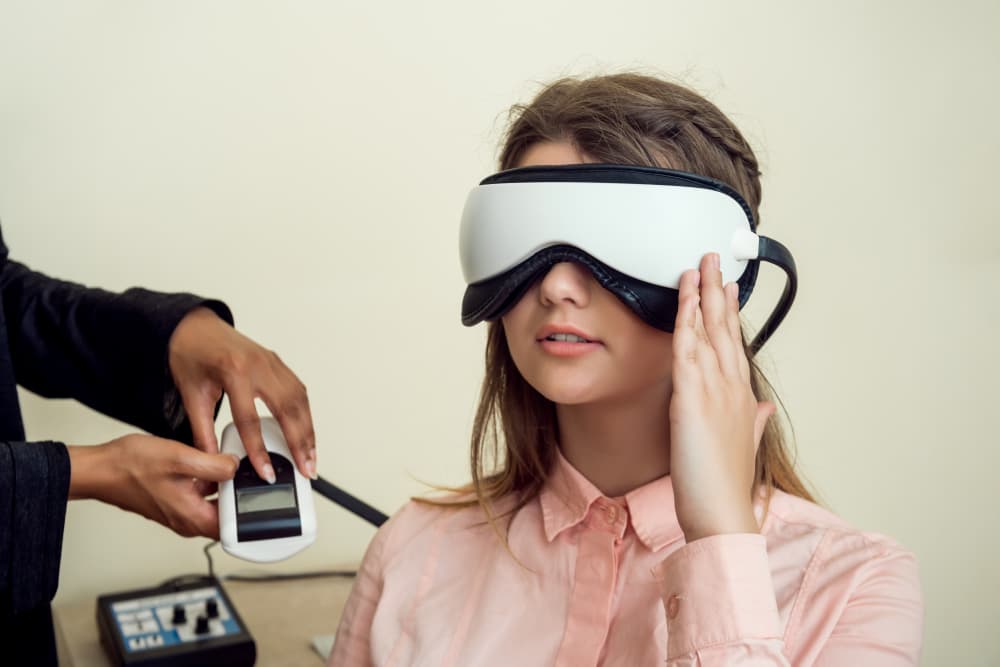
Persistent screen fatigue, blurred text, and tension headaches after a long workday are common indicators of digital eye strain symptoms. As daily screen demands increase, many patients find that traditional remedies such as taking periodic breaks or using over-the-counter lubricating drops offer only brief comfort. When visual discomfort stems from underlying functional issues like poor eye coordination or focusing instability, seeking clinician-guided care becomes an essential step toward long-term relief.
If your eye care professional has suggested tech-enabled vision exercises or you are actively researching advanced clinics, choosing the right provider can feel overwhelming. With emerging technology ranging from immersive virtual reality (VR) headsets to screen-based dichoptic software, how do you know which clinic offers safe, evidence-based, and effective care?
This guide outlines key clinical criteria to evaluate when selecting a clinic for specialized vision therapy, ensuring you receive personalized, clinician-supervised treatment tailored to your visual needs.
1. Clinician Supervision and Comprehensive Clinical Evaluation
The most critical factor when selecting a clinic is ensuring that your care is directed by a qualified eye care professional an optometrist or ophthalmologist specializing in binocular vision and visual rehabilitation.
Vision therapy is not a generic, self-directed workout; it is a personalized clinical program. A reputable clinic will never place you into a VR headset or start digital therapy without first performing a comprehensive binocular assessment.
What to Look For:
- In-Depth Diagnostic Testing: The assessment should measure convergence (how your eyes work together when looking near), accommodation (focusing flexibility), eye tracking, and spatial alignment.
- Symptom & History Review: The clinician should review your daily screen habits, workplace ergonomics, and specific complaints to confirm whether your discomfort stems from functional visual deficits or other issues like dry eye disease or uncorrected refractive errors.
- Customized Treatment Planning: Rather than a one-size-fits-all regimen, the practitioner should tailor exercise parameters, session frequency, and target difficulties to your baseline abilities.
2. Understanding the Technology: VR Headsets vs. Digital Therapy Software
When researching modern eye care facilities, you will encounter various technical terms, including “VR eye exercises,” “digital therapy,” and “dichoptic gaming.” It is important to choose a clinic that is transparent about the specific technology they use and why it fits your condition.
| Evaluation Area | Immersive VR Headsets | Dichoptic Screen Therapy (e.g., BYNOCS DeStrain) |
| Hardware Used | Head-mounted displays (HMDs) | Standard computer displays + specialized eyewear |
| Primary Advantage | Full 360-degree immersion and spatial depth | Comfortable, precise dichoptic visual engagement without headset weight |
| Best Suited For | Specialized dynamic tracking or immersive visual rehabilitation | Computer vision syndrome, convergence insufficiency, and digital fatigue |
| Patient Comfort | Potential for motion sensitivity in sensitive individuals | Very low risk of motion discomfort; easy, familiar screen interface |
A high-quality clinic will explain the distinction between fully immersive hardware and screen-based software. For instance, advanced platforms like BYNOCS DeStrain deliver clinician-directed dichoptic training on standard computer monitors using specialized anaglyph glasses. This provides targeted eye-coordination training without requiring heavy virtual reality headsets.
If you want to understand how these software solutions operate during a session, read about what happens when you try VR-based vision therapy for the first time.
3. Evidence-Based Protocols and Clear Expectations
A trustworthy clinic operates with clinical integrity. Beware of providers that make unrealistic promises, such as “guaranteed 20/20 vision in one week” or “permanent relief from all screen fatigue.”
Key Questions to Ask the Clinic:
- Is the therapy based on proven orthoptic or dichoptic principles?
- How do you measure visual progress over time?
- What is the typical duration and frequency of the treatment plan?
A reputable clinic will explain that digital therapy addresses functional visual mechanics (such as eye teaming and focusing stamina) rather than replacing prescribed lenses or underlying dry eye treatments. They should present therapy as one vital component of a comprehensive digital eye strain treatment strategy that also includes screen hygiene and proper workstation ergonomics.
4. Structured Monitoring and Ongoing Assessment
Effective vision therapy relies on continuous clinical adjustments. As your visual coordination improves, your therapy tasks must adapt to challenge your visual system appropriately.
Signs of an Effective Monitoring Program:
- Periodic Re-Evaluations: The clinic schedules regular check-ins with your optometrist to re-measure eye coordination, focus speed, and tracking accuracy.
- Progressive Difficulty Levels: Interactive exercises adaptively increase in challenge such as adjusting target contrast, movement speed, or depth cues to maintain therapeutic benefit without causing excessive visual fatigue.
- Home vs. In-Clinic Flexibility: Some clinical programs allow monitored home-based sessions using cloud-connected software, provided your progress is routinely checked by your eye care specialist.
To learn more about how interactive exercises actively build visual stamina compared to manual drills, explore our analysis of VR-based vision therapy vs. traditional eye exercises.
5. Patient-Centric Comfort and Accessibility
Because vision therapy requires multiple sessions over several weeks, patient comfort and clinic accessibility play major roles in program adherence and success.
- Comfortable Therapy Environment: Equipment should be well-maintained, easily adjustable, and comfortable for extended use.
- Focus on Preventing Motion Discomfort: The clinic should have protocols in place to monitor for motion sickness or temporary fatigue, adjusting calibration immediately if you feel uncomfortable.
- Patient Education: The team should clearly explain how therapy tasks translate into real-world benefits, such as easier document reading or reduced end-of-day eye strain.
For a deeper dive into how tech-assisted exercises re-train visual tracking and focusing mechanics, read can VR eye exercises improve eye coordination and focus?.
Frequently Asked Questions (FAQs)
1. How do I know if a clinic’s vision therapy program is legitimate?
A legitimate program is led by a licensed optometrist or ophthalmologist, begins with a formal binocular vision assessment, uses evidence-based orthoptic or dichoptic protocols, and tracks objective visual metrics rather than offering generic guarantees.
2. Can I start digital vision therapy without seeing an eye doctor first?
No. An initial clinical evaluation is necessary to identify the root cause of your symptoms. Digital therapy targets binocular coordination issues and focusing fatigue; it cannot resolve uncorrected refractive errors, eye infections, or primary ocular health diseases.
3. Does every vision therapy clinic use VR headsets?
No. Many advanced clinics use screen-based software platforms (like BYNOCS DeStrain) paired with specialized eyewear rather than full VR headsets. Screen-based dichoptic software offers precise visual training with excellent patient comfort.
4. What qualifications should I look for in a vision therapy provider?
Look for an optometrist or ophthalmologist with specific experience or post-graduate training in binocular vision, orthoptics, or visual rehabilitation, as well as staff trained in calibrated vision hardware and software systems.
5. Will my insurance cover digital vision therapy for digital eye strain?
Coverage varies significantly depending on your provider, location, and specific diagnosis. It is best to ask the clinic’s administrative staff to review your insurance benefits prior to starting your evaluation.
6. How long does a clinical vision therapy program typically last?
Program length varies based on clinical findings, but most structured programs involve several weeks of regular sessions (often 20–30 minutes each) with progress checks conducted every few weeks.
7. How does a clinic determine if BYNOCS DeStrain is right for me?
During your evaluation, the clinician assesses your binocular balance, convergence amplitude, and accommodative facility. If functional eye-teaming strain is present, software solutions like BYNOCS DeStrain may be prescribed as part of your overall digital eye strain treatment plan.
8. What should I do if I experience eye fatigue during clinic sessions?
Inform your therapist immediately. Mild fatigue is normal when engaging focusing muscles, but the clinician can modify calibration, contrast, or task duration to maintain comfort.